Forensic Documentary Note — Chapter 3
This chapter documents the first institutional leadership role following the decade of reconstruction described in Chapter 2. Johnson C. Smith University in Charlotte, North Carolina, was the proving ground — the institution where the methodological framework developed through biophysics research and MWRD systems work was first applied at scale to the problem of academic IT administration.
The evidentiary record covers five years of documented operational achievement: organizational restructuring of a failing Data Processing Center, federal funding acquisition, infrastructure modernization from IBM System/3 through System/38, fiber optic installation, and the establishment of regional professional networks. It also documents simultaneous engagement with the emerging microcomputer and early neural network fields — activities that place the JCSU period within the broader technological transformation of the early 1980s.
The pattern established at JCSU — arrive at a fragmented or troubled operation, diagnose the disorder, build the organizational structure, implement the technical solution, leave it functioning — recurs with increasing scale at Winthrop University and Northeastern Illinois University in the chapters that follow.
Foreword
The return to academic life required a recalibration — not of values or method, but of expectations. The institutional politics that had ended the University of Illinois appointment had not disappeared from academia. They had simply been encountered in their true form for the first time.
The departure from academic medicine in 1968 had produced a decade of professional reconstruction documented in Chapter 2. By 1979, the retraining was complete, the computing skills were established, and the practical systems experience at the MWRD was on record. What was required was an institutional context in which those skills could be applied at a leadership level. Johnson C. Smith University provided exactly that — under circumstances that required immediate operational competence rather than a conventional recruitment process.
The skepticism about academic politics that the 1968 experience had generated did not disappear with the return to academia. It was converted into a working methodology: focus on the technical and organizational problem, build the solution on evidence rather than assumption, document the results, and recognize when the work in a given institution has been completed. That methodology defined the JCSU tenure from its first day to its last.
Johnson C. Smith University: 1979–1984
Director of Data Processing / Associate Professor of Computer Science
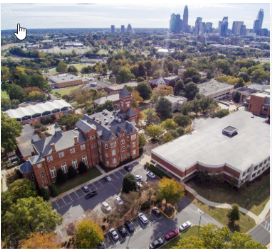
Johnson C. Smith University is an independent, private, coeducational institution in Charlotte, North Carolina. During the 1979–1984 tenure period, the university served over 1,500 students with 89 full-time faculty members, holding accreditation from the Southern Association of Colleges and Schools (SACS), the National Council for the Accreditation of Teacher Education (NCATE), and the Association to Advance Collegiate Schools of Business (ACBSP).
The initial engagement began as an emergency assessment — two former graduate school colleagues, now in senior administrative roles at JCSU, faced a crisis when the entire Data Processing Department staff threatened to resign over payroll demands. The question put to me was direct: could the situation be assessed and, if the staff departed, could their functions be assumed? The answer was yes. A leave of absence was secured from MWRD, and the Charlotte visit confirmed what the colleagues had suspected: the department's problems were organizational and structural, not simply personnel-related. The offer that followed — complete operational control as Director of Data Processing, with an associate professorship in computer science and faculty and student staff support — was accepted on those terms.
Documented Operational Achievements — JCSU 1979–1984
- Designed and implemented the organizational framework for the Data Processing Department, clearly defining staff roles, responsibilities, and pay scales to establish operational accountability.
- Maintained and enhanced the university's Student Information System, writing and updating COBOL programs to manage student records and course registration functions.
- Secured federal funding to upgrade campus computing infrastructure — transitioning from IBM System/3 to IBM System/34, then to the more advanced IBM System/38 — enabling broader administrative automation and upgrades to campus communications infrastructure.
- Developed and led a computer literacy workshop for administrators, faculty, and staff, equipping the institution for the growing role of digital systems in academic operations.
- Taught foundational courses in COBOL, BASIC, and Operating Systems Concepts within the Computer Science curriculum.
- Served on key institutional committees including the Administrative Council, Title IX and Affirmative Action Committee, Scholarship Committee, and MBRS (Minority Biomedical Research Support) Advisory Committee.
- Initiated and oversaw the installation of fiber optic cabling across campus — in an era before Wi-Fi — to improve data connectivity between buildings and departments.
- Volunteered time and computing resources in support of a local hospice organization, applying institutional technology resources to community service.
- Integrated JCSU into the Metrolina System/3 Users Association, connecting the university to a regional network of IBM systems users across industry and higher education.
Metrolina System/3 Users Association — Board Service
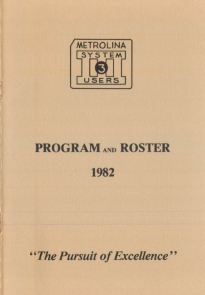
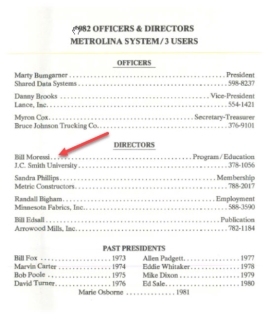
Board service with the Metrolina System/3 (IBM) Users Association placed JCSU within a regional network of sixty-seven active companies and organizations — ranging from hospitals and banks to manufacturers and government agencies — all engaged in the adoption and management of IBM mid-range computing systems. Serving on the Board of Directors as Programs and Education Director, the role involved guiding meeting content, developing educational initiatives, and representing the higher education perspective within a primarily commercial membership.
The practical value of this engagement extended beyond professional networking. Sitting alongside industry leaders from manufacturing, services, healthcare, and government provided direct insight into how thoroughly these institutions — across every sector — were integrating information systems into core operations. That cross-sector perspective informed the applied approach to academic IT administration that distinguished the work at JCSU, Winthrop, and NEIU from purely academic computing management.
IBM Research Triangle Park — Neural Circuits Seminars, Early 1980s
During the early 1980s, IBM maintained a major research facility at Research Triangle Park (RTP), North Carolina — a hub located between Raleigh, Durham, and Chapel Hill — and operated corporate offices in Charlotte. Regular contact with IBM representatives through the JCSU systems relationship led to invitations to IBM-sponsored seminars at RTP exploring the emerging parallels between brain neurology and computer circuitry. The field was beginning to be referred to as "neural networks."
These seminars were significant in context. The biophysics research program documented in Chapter 1 had engaged directly with questions of biological information processing — cellular responses to radiation, repair mechanisms, survival patterns modeled mathematically. The IBM RTP seminars were drawing on related conceptual territory: how biological neural architecture might inform computational design. For a scientist with a background in both biophysics and computing, the convergence was intellectually familiar rather than novel.
The Apple II at JCSU: Productivity Infrastructure
The Apple II microcomputer acquired in 1977 — documented in Chapter 2 — became an essential professional tool at JCSU. BASIC was used for programming; VisiCalc provided spreadsheet analysis; WordStar handled word processing. Grant applications, system proposals, and departmental documentation were all produced on this platform.
The practical value of owning the system outright — rather than depending on institutional computing resources — was demonstrated repeatedly during the JCSU tenure. The Apple II provided independent computational capability at a time when personal computing was not yet integrated into institutional workflows, and its availability gave the department a productivity advantage that institutional systems alone could not have provided.
Charlotte Apple Computer Club: October 13, 1982
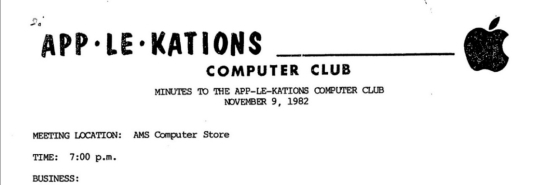
In 1982, to connect with other Apple II users in the Charlotte area, an advertisement was placed in the Charlotte Observer gauging interest in forming a local user group. The response was sufficient to organize the first official meeting of the Charlotte Apple Computer Club on October 13, 1982, at the Apple Tree store in Charlotte. At that meeting, the club's purpose was established — sharing knowledge, resources, and technical support among Apple II owners — and the organizational framework was put in place: meeting space, officers, dues structure, and a program of demonstrations and technical discussions.
The club became an ongoing organization. The founding of it reflects the same community-building instinct that had been evident at the Metrolina Users Association and would later be evident in the professional organizations at Winthrop and NEIU — the recognition that technology adoption is accelerated by organized knowledge exchange, not just by individual acquisition of tools.
Central Piedmont Community College: Part-Time Teaching, 1982–1983
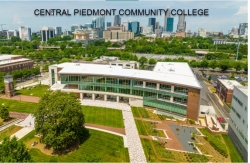
Concurrent with the full-time JCSU position, part-time evening instruction was conducted at Central Piedmont Community College in Charlotte. The courses — Microcomputer Programming in BASIC — reached a broader, non-specialist audience than the JCSU student population, developing the ability to explain technical concepts clearly to learners without prior computing background. Documentation exists for two course engagements: Spring Quarter (April 7 – June 22, 1983) and Summer Quarter (beginning June 29, 1983), both in the Computer Science Department.
CPCC used Commodore PET computers in its classes — a different platform from the Apple II, reflecting the competitive microcomputer landscape of 1982. The Apple II and the Commodore PET, both released in 1977, had introduced practical personal microcomputers to the consumer and educational markets. IBM's 1981 PC entry added corporate credibility and an open architecture that would ultimately reshape the market entirely — a transition that was still in its early stages during the CPCC teaching period.
Shared Data Systems: Concurrent Consulting, 1982–1988

Concurrent engagement as Microcomputer/Communications Specialist with Shared Data Systems, Inc. in Charlotte extended the applied computing work beyond the university context. Shared Data Systems provided business solutions including custom software development and satellite communications, with operations built on IBM System/34 and System/38 mid-range computers accessed through display terminals. The role involved introducing microcomputers and integrating them into the existing communications infrastructure — an early instance of the PC-to-mainframe bridging work that would become standard across the industry within a decade.
Specific contributions included microcomputer consulting covering maintenance, purchase specifications, upgrades, software installation, and PC communications; design, coding, and implementation of an internal department database and Fixed Asset application for the Internal Auditor; and planning and implementation of an Educational Service Center for internal staff and clients. The Shared Data Systems client base centered on Cummins Atlantic and the trucking industry, managing tractor-trailer configuration and fleet data — applied systems work well outside the academic computing environment and directly relevant to the business systems orientation that the Winthrop position would require.
1984: Recognizing Completion and Moving Forward
By 1984, the work at JCSU had been completed in the specific sense that mattered: the Data Processing Center was no longer in crisis. Its systems had been modernized through two successive IBM platform upgrades, its staff was trained and organized, its role within the university was defined and functioning, and its institutional relationships — through the Metrolina Users Association and regional professional networks — were established. The department that had been on the verge of collapse in 1979 was stable, structured, and forward-looking in 1984.
Concurrent with this completion, a shift was occurring in the institutional environment at JCSU — not within the department, but in the broader academic and administrative structure following a change in university leadership. Trusted colleagues began accepting positions elsewhere. The signal was familiar to anyone who had experienced institutional transitions: the conditions that had made effective work possible were changing in ways that suggested the timing for a move was approaching.
The opportunity came through the Vice President of Finance at JCSU — a colleague and friend — who suggested a position at Winthrop University's School of Business Administration in Rock Hill, South Carolina. The position offered nationally accredited programs in Business Administration, Computer Science, and Quantitative Methods, and it matched the accumulated experience of the JCSU tenure precisely. It was the natural institutional next step — larger, more complex, and offering the scope for the kind of campus-wide infrastructure work that the JCSU experience had demonstrated was both necessary and achievable.
Forensic Summary: What the Evidence Demonstrates
The JCSU Data Processing Center was in operational crisis when the appointment began in 1979. The documented record of 1979–1984 — organizational restructuring, federal funding acquisition, two successive platform upgrades, fiber optic installation, student information system maintenance, committee service — demonstrates a complete institutional stabilization executed over five years. The department was not merely repaired. It was rebuilt on a foundation capable of sustaining further development.
JCSU established the operational pattern that would define the next two decades: diagnose the institutional disorder, build the organizational structure, secure the funding, implement the technical infrastructure, document the results. This pattern is directly traceable from JCSU through Winthrop and NEIU. Chapter 3 is where it first appears in complete form.
Board service with the Metrolina Users Association, founding of the Charlotte Apple Computer Club, concurrent consulting at Shared Data Systems, and part-time teaching at CPCC document engagement that extended well beyond the formal JCSU role. The regional professional network built during this period provided the context, the visibility, and the collegial connections that supported the transition to Winthrop.
Participation in IBM's Research Triangle Park neural circuits seminars in the early 1980s placed the JCSU work within the emerging field that would eventually become deep learning and AI. For a scientist whose biophysics research had engaged with biological information processing since the early 1960s, these seminars represented a convergence of two longstanding threads of inquiry — not an introduction to a new field, but a recognition of familiar territory in a new computational context.
Johnson C. Smith University was the first proof of concept. The methodology that had governed laboratory research since the early 1960s — applied now to institutional administration — produced the same result it had always produced: a documented, verifiable record of systematic progress from disorder to functioning order.