Forensic Documentary Note — Chapter 1
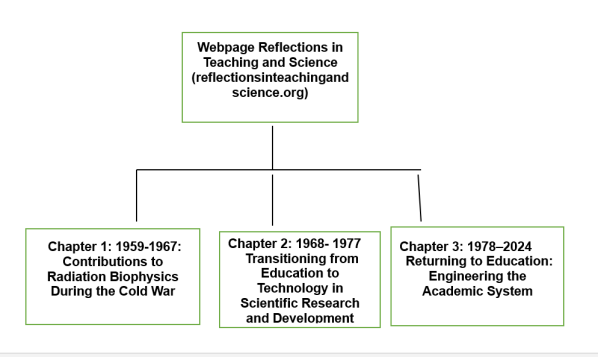
This chapter establishes the evidentiary foundation of the documentary. It presents the primary record of scientific work conducted between 1959 and 1968 — research funded by the U.S. Air Force, the National Institutes of Health, and the American Cancer Society; presented at national and international conferences; published in peer-reviewed journals; and recognized by the Atomic Energy Documentation Center of the Gmelin Institute in Frankfurt.
It also documents the decisive institutional confrontation of 1968 — the event that redirected the trajectory of the entire career that follows. That event is presented here as it occurred, supported by the factual record, and analyzed for what the evidence demonstrates rather than what institutional convention preferred to record.
The subject is William J. Moressi, Ph.D. The method is forensic. The conclusions follow from the evidence.
Prologue
My life has shifted — sometimes intentionally, often unpredictably — between science, teaching, and technology. None of it followed a detailed plan.
When I started in the late 1950s, I was trying to find my way through graduate school, working on research projects that sometimes felt meaningful and sometimes just like hard work. I did not realize then that those early studies in radiation biophysics would place me at the center of Cold War scientific concerns. Years later, I found myself consulting for government agencies on topics I could not discuss with most of my colleagues or anyone else.
Some years proved rewarding — when a research idea succeeded, or when a student told me I had helped them reach their career goals. At other times, I felt held back by bureaucracy, funding pressures, or the slow pace of change in academic institutions. I faced organizational brick walls on numerous occasions. My training as a scientist, along with my natural temperament, made those confrontations unavoidable. Some of them led me to change jobs or careers. Throughout, I remained a scientist — committed to the scientific method of thinking as the governing discipline of both research and judgment.
Over time, my work shifted from education and research to computing technology and academic administration. Each transition brought its challenges. Progress — whether in science or in education — rarely comes without resistance. This documentary provides the detailed evidentiary account of those events and the analytical framework for understanding what they demonstrate.
Three phases define the professional arc: the early years in radiation biophysics during the Cold War; a transition into computing and research development; and the final stage of transforming education and academic information systems across three major institutions. This chapter covers the first.
The Cold War Context: 1962–1968
The research documented in this chapter was conducted against the backdrop of the most dangerous period of Cold War tension in American history. Understanding that context is essential to understanding both the nature of the work and the government's interest in it.
Cold War Chronology — The Research Years
- 1962 Cuban Missile Crisis — peak U.S.–Soviet nuclear confrontation; escalated urgency of military radiation research.
- 1963 Limited Nuclear Test Ban Treaty signed by the U.S., USSR, and UK — first formal constraint on nuclear testing.
- 1964 Khrushchev ousted; Brezhnev and Kosygin assume power; China tests its first nuclear device.
- 1965–1967 Nuclear arsenals expand; France and China conduct additional tests; Vietnam War escalates — defense research funding increases.
It was within this environment that research on the biological effects of radiation — microwave, ultraviolet, and ionizing — carried both scientific and strategic significance. The U.S. Air Force was an active funding partner precisely because the health risks of radar and microwave exposure to military personnel were an operational concern, not merely an academic one.
Foundational Scientific Training: The Radiation Record
Evidentiary Table — Radiation Exposure and Research Experience, 1958–1964
| Date | Energy Type | Research or Training Experience |
|---|---|---|
| 1958–1959 | Electromagnetic Energy Spectrum | Thirteen advanced credit hours in physics from two major universities, including the Physics of Electromagnetic (Radiant) Energy. |
| 1958 | Radioisotopes | University of Iowa biochemistry experiment using carbon-14 isotope to trace glucose uptake as glycogen in rat liver. |
| 1961–1962 | Particle Radiation | Completed Human Engineering for Space Travel coursework; engaged with Professor James Van Allen's radiation belt research at the University of Iowa; served as President of the Sigma Xi Scientific Research Society. |
| 1961–1962 | X-Ray Radiation | Physical Chemistry program, Chemical Engineering; X-ray diffraction of KI (potassium iodide) crystals to determine crystalline system, unit cell size, cell density, and interatomic distances. Regression calculations performed on the LGP-30 drum memory computer — among the earliest documented uses of computational methods in this scientific record. Original laboratory report with raw data, LGP-30 coding sheets, and error analysis (University of Iowa, c. 1961–1962). |
| 1962 | Visible Radiant Energy | Advanced Pharmacology, University of Iowa College of Medicine: Trichromatic Theory of Color Vision — neural activity ratios in cone receptors. |
| 1961–1964 | Microwave Radiation | Predoctoral Fellow (U.S. Dept. of Health, Education, and Welfare / U.S. Air Force Grant): experimental effects of microwave radiation on organisms and cancer tissue. Demonstrated molecular mechanisms of microwave injury in living tissue, providing the explanatory basis for cataract formation in Air Force radar personnel. |
Foundational Scientific Training — Thermodynamic Systems · University of Iowa · 1961–1962
Concurrent with the radiation physics program, a full-year Physical Chemistry course in the Chemical Engineering department provided formal training in thermodynamics — specifically the electrochemical measurement of thermodynamic state functions: free energy (ΔF), enthalpy (ΔH), and entropy (ΔS) — using the Gibbs-Helmholtz equation applied to an electrochemical cell. Error propagation and confidence interval calculations were performed manually. Experimental value for ΔH: −32.55 ± 0.73 kcal/mole; literature value −33.62 kcal/mole — within the 95% confidence interval. Original laboratory report with raw data, calculations, LGP-30 coding sheets, and error analysis (University of Iowa, c. 1961–1962).
Evidentiary Note — Origin of the Negentropy Framework
The Physical Chemistry laboratory work documented in the table above — specifically the electrochemical measurement of entropy change (ΔS) using the Gibbs-Helmholtz equation — represents the earliest primary-source record of entropy as a working experimental tool in this career. Raw voltage data measured across three temperatures, propagated error calculations, graphical extrapolation to the standard cell potential E⁰, and a formal discussion comparing experimental results to literature values are all preserved in the original laboratory report linked above.
This is not a peripheral credential. The concept of entropy measured at the laboratory bench at the University of Iowa in 1961–1962 is the same physical concept — entropy as a quantifiable measure of disorder — that informed the Towards Negative Entropy: A Strategic Plan presented at the CAUSE National Conference in San Diego in 1989. The distance between the electrochemical cell and the Winthrop campus network is approximately twenty-seven years. The underlying scientific principle is identical.
University of Iowa College of Medicine: 1959–1963
1959–1961: Research Assistant — U.S. Air Force Grant
Graduate research was funded by the United States Air Force — a grant that also conferred draft deferment status, reflecting the defense-relevant nature of the work. Research was conducted under Dr. Charles C. Wunder in the Department of Biophysics, with focus on the physics, chemistry, and mathematics of living systems. The central experimental question concerned the effects of 2450 MHz microwave radiation on the growth of fruit fly larvae. Findings established that the biological effects were primarily thermal in mechanism — a conclusion with direct implications for understanding microwave-related health risks in military personnel exposed to radar.
1961–1962: National Institutes of Health Predoctoral Fellowship
Full-time graduate research in radiation biophysics, funded by the NIH, focused on the biological effects of microwave radiation. This fellowship represented concurrent federal recognition from both defense and health research agencies — an unusual dual validation of the work's significance.
1962–1963: Pre-Doctoral Instructor
During the 1962–1963 academic year, while completing doctoral research, a full-year course in Medical Physiology was taught to Nursing and Physical Therapy students at the University of Iowa College of Medicine. This appointment represented the first formal teaching responsibility of the academic career — instruction delivered at the pre-doctoral level within a professional health sciences curriculum.
1963: Ph.D. Awarded — Biophysics and Medical Physiology
Upon completion of the doctoral degree, the research focus shifted to the effects of ultraviolet radiation on DNA — examining molecular changes while preserving the structural integrity of the DNA molecule. This represented an important expansion of the research program from microwave to UV radiation effects.
Key Publications and Presentations — University of Iowa Period
-
Searle, G.W., Dahlen, R.W., Imig, C.J., Wunder, C.C., Thomson, J.D., Thomas, J.A., and Moressi, W.J. (1961). Effects of 2450 MHz microwave radiation on dogs, rats, and larvae of the common fruit fly. In M.F. Peyton (Ed.), Biological Effects of Microwave Radiation (Vol. 1, pp. 187–200). New York: Plenum Press. [Presented at the Fourth Annual Tri-Service Conference on the Biological Effects of Microwave Radiation, 1960.]
This study established that exposure to 2450 MHz microwave radiation produces primarily thermal effects in biological tissues across multiple species. Funded by the U.S. Air Force, the research provided the scientific foundation for understanding health risks — including cataract formation — in military personnel exposed to radar installations.
-
Moressi, W.J., Wunder, C.C., & Imig, C.J. (1960). Growth rate of fly larvae during exposure to 12.25 cm microwave irradiation. Abstract presented at the Annual Meeting of the American Physiological Society, Stanford University, Palo Alto, CA.
Early experimental evidence that microwave radiation affects biological development primarily through heating mechanisms rather than direct non-thermal effects. Presented at Stanford before the American Physiological Society.
-
Moressi, W.J., Wunder, C.C., & Imig, C.J. (1961). Survival and growth of fruit fly larvae during exposure to 12.25 cm electromagnetic radiation. Abstracts: Fifth Annual Meeting of the Biophysical Society, St. Louis, MO.
Confirmation that thermal effects are the primary mechanism of microwave-induced biological change — a finding with lasting significance for radiation safety standards in military environments.
-
Moressi, W.J., Herrin, W.F., & Wunder, C.C. (1961). Experimental and mathematical techniques for kinetic studies of larval fruit fly growth. Proceedings of the Iowa Academy of Science, 68(1), 603–615.
Peer-reviewed publication developing experimental and mathematical methods for measuring growth effects under microwave exposure. Supported by the American Cancer Society and the U.S. Air Force.
University of Illinois College of Medicine: 1963–1968
Assistant Professor, Department of Physiology and Biophysics
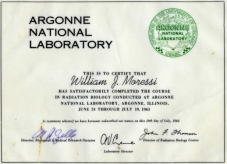
Rather than accepting a postdoctoral position at Argonne National Laboratory — for which candidacy had been established — a departmental directive from the Iowa program redirected the appointment to the University of Illinois College of Medicine as Assistant Professor. The summer of 1963 was spent at Argonne's Radiation Biology program before assuming the Illinois position in the fall.
At Illinois, teaching responsibilities covered physiology for medical and allied health students and graduate courses in the scientific method and biophysics. A central part of this teaching program was the design and instruction of Analog Computer Techniques (Physiology 412), a graduate laboratory course built to train students in the direct application of analog computing to physiological research — among the earliest formal courses of its kind, and identified in the department's own course justification as a foundation for its expanding Biophysics Program. Responsibility for the course accompanied management of the analog computer laboratory and the medical research library, along with service as Staff Secretary to Department faculty meetings under the Department Head. Additional duties accumulated outside the formal scope of a non-tenure technical appointment: supervision of two graduate students in Endocrinology toward their degrees — a role formally disallowed for non-tenure personnel — appointment by the Dean of the College of Medicine to a committee reviewing medical student applications, review of required medical science coursework for incoming students from McGill University in connection with the new Bioengineering Program, and instruction of those same McGill students in the Analog Computer Techniques course. The Dean also periodically requested review of scientific articles in Spanish, French, or German submitted by Ph.D. candidates completing their language requirements. These duties were assigned independently by the Department Head and the Dean, without coordination between the two offices.
This analog computing work extended directly into the active research program. At the 1966 Biophysical Society meeting, a paper co-authored with J. C. Osburn and C. C. Wunder presented the development of a mathematical model and electronic analog of a hypothetical biological survival pattern — comparing radiation-induced cellular survival curves of increasing complexity against theoretical predictions, and testing a modified Gompertz-decay model against simple exponential and multihit-multitarget alternatives. The work drew outside attention: in February 1966, Dr. Richard Moore, a research biophysicist with the American National Red Cross Blood Program, wrote directly requesting a preprint and instructions for setting up the survival-pattern model on an analog computer.
The broader research program continued on cancer cell growth and death under ultraviolet radiation, with results presented at national and international conferences. Committee service included contributions to establishing a biomedical engineering program — an early recognition that the boundaries between biology, physics, and computing were becoming methodologically significant.
Key Publications and Presentations — University of Illinois Period
-
Moressi, W.J., Wunder, C.C., Eastbourne, J.O., Lutherer, L.O., and Andrews, R.V. (1963). Mortality patterns of mouse Sarcoma 180 cells resulting from direct heating and chronic microwave irradiation. Abstract: Sixth Annual Meeting of the Biophysical Society, New York, NY.
Comparative analysis of thermal and microwave-induced mortality in mouse cancer cells, establishing the mechanistic similarities between direct heat and microwave energy effects at the cellular level.
-
Moressi, W.J. (1964). Mortality patterns of mouse Sarcoma 180 cells resulting from direct heating and chronic microwave irradiation. Experimental Cell Research, 33, 240.
Peer-reviewed journal publication confirming through mathematical modeling that the dominant mechanism of microwave-induced cell death is thermal rather than non-thermal. Published in Experimental Cell Research.
-
Moressi, W.J., Osburn, J.O., Wunder, C.C., Andrews, R.V., and Lutherer, L.O. (1964). The development of a mathematical and electronic analog of a hypothetical biological survival pattern. Journal of Theoretical Biology [under review].
Development of both a mathematical model and an electronic analog to simulate how biological survival factors influence cell survival after radiation exposure. The work shifted from exponential to modified Gompertz models, demonstrating that cumulative damage and protective factors provide a better empirical fit than traditional discrete-hit models.
-
Lutherer, L.O., Wunder, C.C., Moressi, W.J., and Dodge, C.H. (1964). Implanted tumor growth in mice exposed to continuous centrifugation. Nature, 201, 303.
Published in Nature. Investigated the physiological and oncological effects of altered gravitational environments on cancer progression — an early contribution to the emerging field of space medicine and gravitational biology.
-
Moressi, W.J., Eastbourne, J.O., and Wunder, C.C. (1966). The development of a mathematical model and electronic analog of a hypothetical biological survival pattern. Abstract: Ninth Annual Meeting of the Biophysical Society, Boston, MA.
Extension of the mathematical modeling work, presented at the Biophysical Society's national meeting, demonstrating quantitative methods for analyzing cellular responses to environmental stressors.
-
Moressi, W.J., Casper, D., and Weitek, M. (1966). Computer analysis of radiation (non-ionizing) induced patterns of cellular mortality. Abstracts: Second International Biophysics Congress, Vienna, Austria.
Presented at the International Biophysics Congress in Vienna — one of the premier international venues in the field. This work introduced computer analysis to examine ultraviolet radiation-induced cell death patterns, combining computational tools with experimental biophysics at a time when such integration was methodologically novel.
Annotation: The Final Research Program at Illinois — Significance and Subsequent Validation
The final research program at the University of Illinois College of Medicine — focused on ultraviolet radiation effects on cell populations — predicted biological insights that were later confirmed by independent science. Specifically, the work proposed that non-lethal UV exposure could activate cellular repair mechanisms in irradiated populations. This was not a widely accepted hypothesis at the time.
Building on George Pólya's framework of induction by conjecture from Induction and Analogy in Mathematics, the study treated observed survivals in irradiated cell populations not as statistical anomalies but as evidence of an active biological repair process. A modified Gompertz function was developed to model this concept mathematically — extending beyond the traditional mortality-only framework to incorporate the possibility of biological recovery.
To test the model's behavior, electronic analog systems were combined with digital computation — an innovative technique for the mid-1960s. The analog approach allowed the theoretical model to be evaluated dynamically and intuitively, demonstrating how multivariable reasoning, mathematical abstraction, and cross-disciplinary analogy could converge on a plausible, testable hypothesis.
Subsequent validation arrived decades later. In 2010, Rastogi, Richa, Kumar, Tyagi, and Sinha published "Molecular Mechanisms of Ultraviolet Radiation-Induced DNA Damage and Repair" in the Journal of Nucleic Acids, confirming that cells possess robust self-repair systems that respond specifically to UV-induced damage — precisely the mechanism the 1966 modeling work had hypothesized. The hypothesis, advanced by conjecture in 1966, was confirmed by molecular evidence in 2010.
Primary Source Document — Gmelin Institute, Frankfurt, Germany
Re: 2nd International Biophysics Congress, Wien, Sept. 5–9, 1966
Dear Dr. Moressi,
We would very much appreciate receiving a copy of your paper presented at the above meeting, entitled: Computer analysis of radiation (non-ionizing) induced patterns of cellular mortality.
The Atomic Energy Documentation Center at the Gmelin Institute (Zentralstelle fuer Atomkernenergie-Dokumentation beim Gmelin-Institut) is collecting conference papers in the field of nuclear energy, which are catalogued and evaluated for listing in our monthly publication AED AB-Informationen zur Kernforschung und Kerntechnik.
These papers are made available, upon request, to individual scientists and engineers.
Thank you for your courtesy.
Very truly yours,
(Dr. Irmgard Wensel)
The Gmelin Institute's Atomic Energy Documentation Center was the principal international clearinghouse for nuclear and radiation science literature during the Cold War period. A request from this institution for a copy of the Vienna paper constitutes independent, international recognition of the work's relevance to the global scientific record. This document is part of the primary evidentiary record of this chapter.
Central Intelligence Agency: A Personal Account, 1966–1967
I carried a second, quieter obligation during those Illinois years, one I could not speak of at the time and rarely have since. It began around the Cuban Missile Crisis — not as an assignment, but as something that took hold of me. I watched the world come close to catastrophe, and I found myself asking what I, specifically, with the training and access I had, might be able to do. It wasn't a task handed to me. It was something I wanted.
By 1966, that instinct had a shape. At the Second International Biophysics Congress in Vienna — the same congress where I presented the computer analysis of radiation-induced cellular mortality — I sat at a dinner table, during an evening at the Vienna Choir Orchestra, across from two Russian scientists. They spoke excellent English. We talked openly about our work, scientist to scientist, the way people do when the subject is genuinely shared ground. I don't know if either of them ever knew what that conversation became on my end.
What followed lasted roughly a year and a half. I can't produce a personnel file or a signed confirmation — that isn't how this kind of work leaves a trace, and I've made my peace with that. What I have is a handful of surviving letters, water-damaged now, one of them a plain, formal note from a man named Ersel E. Martin, thanking me for returning some documents, wishing me a happy holiday season. To anyone else, it would read as nothing. To me, it's a marker of something that consumed real time, real risk tolerance, and real conviction, during a period when I believed — without cynicism, without reservation — that this was a way I could help my country.
I am not asking this record to prove itself. I'm stating it as fact, from my own memory, because it happened, because it mattered enormously to me at the time, and because I have never stopped carrying it.
National Laboratory Collaborations: 1963–1967
Argonne National Laboratory
Candidacy as a postdoctoral researcher in Radiation Biology at Argonne National Laboratory had been established prior to the Illinois appointment. Although the ANL postdoctoral position was ultimately not taken — due to a departmental directive from the Iowa program — the summer of 1963 was spent completing a formal program in Radiation Biology at Argonne. During the subsequent Illinois years, ongoing visits to ANL continued, including discussions of the active research program with laboratory staff, equipment loans, and access to specialized scientific support not available within the university setting.
Los Alamos National Laboratory — Training for the Nuclear Age
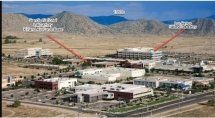
In 1964 or 1965, at the request of the Dean of the College of Medicine, attendance was required at a Medical Education for National Defense (MEND) conference at Los Alamos National Laboratory. The training was conducted at Sandia Base, a secure facility adjacent to Kirtland Air Force Base, under the sponsorship of the Defense Atomic Support Agency (DASA). The attendees were a select group of physicians and educators. The environment was one of deliberate secrecy and strategic purpose.
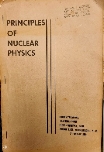
▶ Click image to open the manual
At the conference, a technical manual titled Principles of Nuclear Physics was distributed — developed by the Atomic Weapons Training Group and published by Sandia Base in March 1960. That copy, bearing the name and University of Illinois address, remains in the personal archive. The manual was studied systematically, with sections marked as the material was worked through. It was designed for professionals with no background in pure physics, providing essential knowledge for teaching and training in nuclear phenomena.
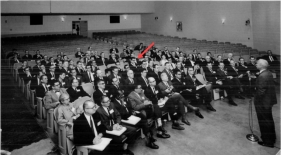
The curriculum covered atomic structure, fission and fusion mechanics, neutron interactions, radiation biology, and the medical effects of nuclear exposure. Training methods included specialized films, expert lectures, and tours of experimental facilities simulating nuclear effects. Upon returning to the University of Illinois, this material was presented to radiologists, medical educators, physicians, and students. The national strategic intent was clear: to prepare civilian medical and academic institutions — not only military facilities — for the possibility of nuclear warfare. This training formed part of the broader Cold War effort to quietly and systematically prepare the nation for the unimaginable.
Fermi National Accelerator Laboratory
Ongoing collaborative exchanges in radiation biophysics were maintained with Fermilab during this period. The nature of those connections, and their continuation into the following decade through personal relationships formed in Chicago's Little Italy neighborhood, is documented in Chapter 2.
1968: The Defining Transition

The event that redirected the trajectory of the entire career occurred in 1968 at the University of Illinois Medical School. While assisting a cardiologist — work that involved analyzing heart pressure-volume data using analog computing to calculate cardiac work — attendance was required at a seminar on the cardiologist's behalf. At that seminar, the presenter claimed that certain patients' hearts behaved as if they had three chambers, and was prescribing treatment on that basis. When asked to present supporting data beyond what had been written on a chalkboard, the presenter responded that the audience would "have to take his word for it." The reply was direct: "I don't have to take your word for anything." The seminar was left.
The institutional response was immediate. The following day, a referral was made to a psychiatrist for "hostile behavior," with a request to sign treatment papers. A departmental colleague characterized the situation as an attempt to "polish off some of your rough edges." As an untenured professor carrying tenured responsibilities, the coercive intent of that framing was apparent. What followed confirmed it: laboratory access was revoked, pay was delayed, and draft status was reclassified — rendering eligibility for military service during the Vietnam War.
Stress-related symptoms developed. Valium was prescribed. Institutional communications were channeled through legal and psychiatric intermediaries — a procedural containment strategy that prioritized institutional protection over factual inquiry.
Ultimately, the treatment papers were signed — not because the characterization was accurate, but because the financial and professional costs of continued refusal had become untenable. The consequences of non-compliance included being effectively blacklisted from any future position requiring a reference from the medical school.
This event is documented here not as grievance but as evidence. It is the pivotal data point from which the subsequent career trajectory follows. The scientist who would not accept an assertion without supporting data was removed from an institution that required exactly that deference. What came after — the reinvention, the return to academia, the transformation of three universities — was built on the same refusal to subordinate evidence to authority. The institution changed the career path. It did not change the method.
Forensic Summary: What the Evidence Demonstrates
The period 1959–1968 produced a documented research record funded by the U.S. Air Force, the NIH, and the American Cancer Society; published in peer-reviewed journals including Experimental Cell Research and Nature; presented at national and international conferences including the Second International Biophysics Congress in Vienna; and recognized by the Atomic Energy Documentation Center of the Gmelin Institute. The credentials are primary-source verified.
Bill's own firsthand account describes a period of confidential analytical work connected to U.S. intelligence interests during 1966–1967, tied to the Vienna congress. This is presented as personal testimony and lived experience, not as a documented evidentiary claim — the surviving correspondence is real, but the specific nature of the engagement rests on Bill's own memory rather than independent confirmation.
Formal training at Argonne National Laboratory and Los Alamos National Laboratory, combined with ongoing Fermilab connections, placed the research program within the national nuclear and defense science infrastructure of the Cold War period. These were not peripheral associations — they were integral to the research mandate.
The institutional confrontation at the University of Illinois Medical School is the evidentiary pivot of the documentary. The facts are documented. The institutional response — psychiatric referral, revocation of lab access, pay delay, draft reclassification — constitutes a pattern of retaliation against the exercise of scientific skepticism by an untenured faculty member. The outcome — departure from academic medicine — redirected a career that had been operating at the highest levels of its field.
Note: this section is scheduled for a fresh Analysis of Competing Hypotheses (ACH) reanalysis, incorporating the fuller documentary record now established for this chapter.
The scientific method that governed the laboratory work — define the problem, examine the evidence, test the hypothesis, state the conclusion — is the same method applied throughout this documentary to the analysis of institutions, careers, and decisions. Chapter 1 establishes both the subject and the instrument of analysis. The chapters that follow demonstrate both in operation across six more decades.
"I don't have to take your word for anything." — The statement that redirected a career. The principle that governed everything that followed.